
What is the problem?
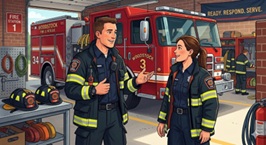
Firefighters and correctional officers face high rates of trauma and mental health challenges at work, but the “tough” culture of these male-dominated professions makes it hard for many workers to engage with mental health training.
How did the team study the problem?
Researchers interviewed 10 peer resiliency trainers, people who deliver mental health training to firefighters and correctional officers across three Canadian provinces, about their experiences and beliefs about how gender affected resiliency training participation and delivery. The team used structured thematic analysis to identify patterns.
What did the team find?
The study found that gender stereotypes quietly shape how resiliency training is delivered and received. Mental health was often viewed as a “feminine” topic, which made some men less willing to engage in programs or supports. Women sometimes avoided it to avoid looking weak in front of men colleagues. Men trainers were seen as credible because their toughness made the content feel less “soft”. Women trainers were respected for being seen as naturally nurturing and not necessarily for their knowledge or skills. This created a paradox: while mental health training gave women a rare leadership opportunity in men-dominated workplaces, it also risked boxing them into emotional support roles and reinforcing the very stereotypes that have held them back.
How can this research be used?
Organizations that run mental health resiliency programs for firefighters and correctional officers can consider that gender might affect the process. Having both men and women deliver training together may help engage all firefighters, while avoiding biases that mental health work is better performed by women, or “women’s work”. Program designers, fire services, and mental health providers should be aware that gender stereotypes can quietly undermine both firefighters’ participation in mental health programs, and the careers of women firefighters.
Cautions
This study involved only 10 trainers from three Canadian provinces and best reflect those opinions and experiences. The views reported are those of the trainers, not the firefighters who received the training, which may differ.
Reference: MacDermid JC, Fletcher A J, Killip SC, Brazil, A, Ricciardelli R, Campbell Bromhead R. (2026). Who is the “ideal” peer support trainer? Peer trainers’ perceptions of gender dynamics in resiliency training for firefighters and correctional officers. Occupational Health, 1, 10. https://doi.org/10.3390/occuphealth1010010
Funding Sources: This research was funded by the Canadian Institutes for Health Research (grant numbers FRN: 162539 and FRN: 165070). Joy C. MacDermid is also supported by a Canada Research Chair (Tier 1) in Musculoskeletal Health Outcomes and Knowledge Translation and the Dr. James Roth Research Chair in Musculoskeletal Measurement and Knowledge Translation.
Acknowledgments This summary is based on a scientific paper that was summarized with assistance of AI language and image support, and then revised by researchers, content experts, and firefighter collaborators.
