
What is the problem?
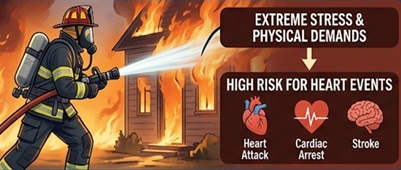
Firefighters face extreme stress and physical demands that put them at high risk for sudden adverse heart events (e.g., heart attack, cardiac arrest, stroke), yet there is very little specialized support to help them safely return to work after a heart event.
How did the team study the problem?
The research team interviewed nine male firefighters from Canada and the U.S. who had experienced a serious heart event during their careers. They used a qualitative approach to analyze these personal stories and identify common challenges these men faced during their treatment and recovery.
What did the team find?
The study found that doctors often treat firefighters like the general public, failing to consider the unique mental and physical pressures of their job. Most firefighters experienced significant anxiety and overthinking during recovery and return, yet their mental health was not considered by healthcare providers. Additionally, a “tough” culture within the fire service created a stigma that made it hard for members to admit they were struggling, while having strong support from family and coworkers was identified as the most important factor for a successful return to work.
How can this research be used?
Fire departments and healthcare providers can use these findings to create specialized recovery plans and mental health programs specifically designed for the unique needs of firefighters. This information is needed to ensure that firefighters are both physically and mentally ready to safely return to their demanding work.
Cautions
This study focused on a small group of nine male firefighters, so the findings may not fully represent the experiences of female firefighters or those outside North America.
Reference: Stretton SM, MacDermid JC, Attalla JW, MacPhee R, Walton DM. (2026). Experiences in Treatment, Recovery, and Return-to-Work Following an Acute Cardiac Event Among Firefighters: A Descriptive Thematic Analysis of Firefighter Experiences. Journal of Occupational Rehabilitation. https://doi.org/10.1007/s10926-026-10366-y
Funding Sources: Joy C. MacDermid is supported by a Canada Research Chair (Tier 1) in Musculoskeletal Health Outcomes and Knowledge Translation and the Dr. James Roth Research Chair in Musculoskeletal Measurement and Knowledge Translation.
Acknowledgments: This summary is based on a scientific paper that was summarized with assistance of AI language and image support, and then revised by researchers, content experts, and firefighter collaborators.
